


Paris is a must see city. If you haven’t been, it’s on your list. If it’s not on your list, then your list needs updating! And even if you’ve already been, Paris has the kind and number of attractions to reward going back.
Like all my favourite cities, Paris rewards walkers (pedestrians, not zombies). The Metro is iconic and a great way to get around if you’re in a hurry, but it’s when you’re wandering above ground from one sight to the next that I’ve always had the most pleasure in the City of Light. Invariably you’ll stumble across another museum, building, boutique, boulangerie or view to enjoy.
So rather than heading to Paris with a simple itinerary of must see sights, consider a series of routes instead. Below are some of the favourites I’ve discovered over the years of visiting. Each route is about a day’s worth of leisurely touristing, so take a look, then book some flights and prepare for a real Paris love affair!
Day 1 – SOUTH
Rather than rushing to the obvious, postcard places, I’d suggest working your way up to them; build a little anticipation and remind yourself right from the very beginning that there’s a lot more to Paris than the Eiffel Tower, and there’s no better way to be off the beaten track than by heading underground to hang out with the dead.
1. Les Catacombes de Paris:
Start this day by getting out to Montparnasse early! Queues will form all year round and in every weather, but if you get to Denfert-Rochereau station first thing, you’ll be on track. The catacombs are an amazing monument to the city’s survival through years of plague and war. A celebration of life as much as a gory spectacle.
2. Jardin de l’Observatoire de Paris:
Once you’re back above ground you’ll want to enjoy some fresher air. Head just 5 minutes down the road to the Paris Observatory and its surrounding gardens.
3. Le Jardin du Luxembourg:
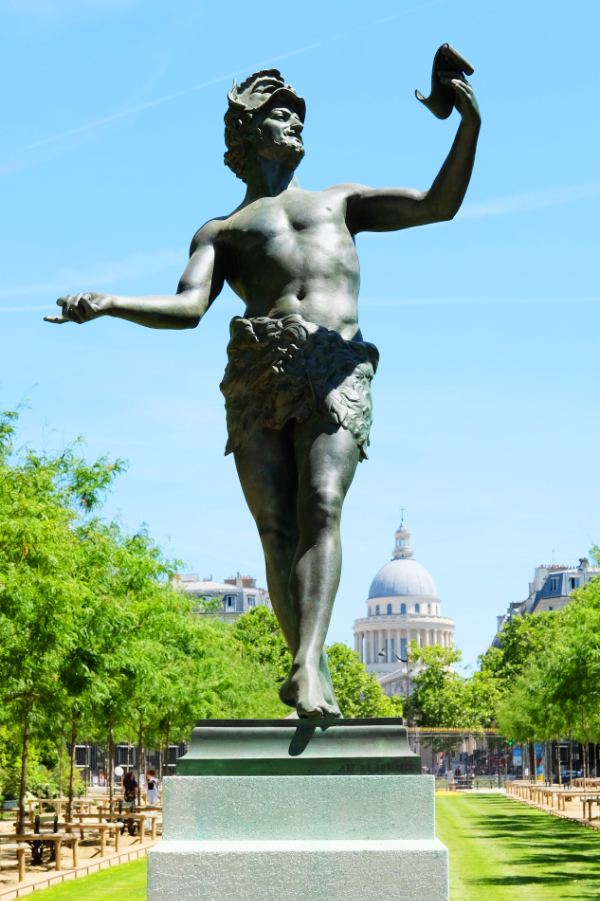
From there, keep going north until you reach Port-Royal station and Jardin des Grands Explorateurs, which leads down to the renowned Luxembourg Gardens. Grab a crepe, rent a miniature yacht to sail in the fountain and sit in the shade to watch the Parisians go by; all in the shadow of France’s modern day senate house: the Luxembourg Palais.
4. Musée Curie:
From the north-east end of the gardens, you’ll be slapped in the face by the imposing facade of the Panthéon, framed by the elegant Rue Soufflot, but before you go there, consider the lesser visited museum dedicated to one of the 19th/20th century’s most accomplished scientists: Marie Curie!
You’ve now wandered into the region of Paris actually called Sorbonne, after the renowned university. Here Curie, her husband and hundreds of years of very clever people studied and taught and the streets even take on a charmingly cobbled, Cambridgian, fastidious air.
5. Panthéon:
Once you’ve boned up on your science, head to the Panthéon, the cathedral converted to a national monument during the anti-religious fervour of The Revolution. A beautiful building with a fascinating collection of revolutionary art, now the resting place for all great French achievers (including the Polish-born Mdme. Curie!)
6. Musée de Cluny:
Continue to meander northward through the winding streets around the Sorbonne until you get to Rue des Écoles (literally the street of the schools) and you’ll find yourself outside the remarkable little Cluny Museum.
This collection of artefacts of the Middle Ages is really special and often missed by those who have already gorged themselves at the Louvre, but one the stars is the building itself, originally a Roman bath complex, converted to a cornerstone of an abbey complex at the 14th century founding of the Sorbonne area as a centre for learning, then with a gothic mansion tacked onto it over centuries of development; this is a joyous little museum to explore.

7. Shakespeare & Company:
From there, it’s just a skip north to the Seine. Before you get carried away with snapping pics of the Notre Dame across the river, make sure you turn around and visit the famous English-language bookstore Shakespeare & Company.
Why come to Paris to buy an English book? Because this bohemian mainstay has been an embassy for English culture in this most cultured of European cities for almost 70 years, operating not only as a bookstore but as a squat-cum-hotel for artists of all stripes passing through the city.
8. Cathédrale Notre-Dame de Paris:
Right! Now you can take your pictures!
Tragically, of course, the iconic cathedral Notre Dame, was seriously damaged by fire in April 2019, meaning you’re only enjoyment of the building will be from the outside for a few years to come. Tragedy-aside, the exterior remains an icon of gothic architecture; its elegant weight and flying buttresses are still a blessing to Paris and the world. (And one day you’ll be able to go back inside and glory at the incredible stained glass; and back into the Crypt with its amazing window into the past.)
9. Île Saint-Louis:
Once you’ve crossed the Pont des coeurs and walked the length of the cathedral – always looking up to take in the famous gargoyles – you’ll come to the Pont Saint-Louis, which takes you across to one of the city’s quaintest quarters. One of the earliest and best preserved examples of city planning in the world, these are still some of the prettiest streets to lose yourself in.
9.1 Berthillon Glacier
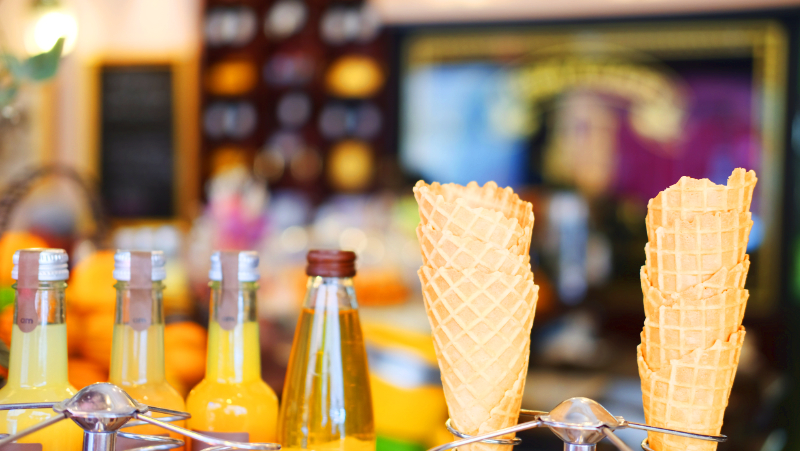
And on the Île Saint-Louis you’ll also find the Berthillon Glacier! After this long day’s walking, you’ve earned a sorbet (or gelato) and this is among the very best in Paris. Sample them all and then treat yourself to a bombe – you’ve earned it!
[booking_product_helper shortname=”paris”]
Day 2 – CENTER: North of the Seine
This is a classic day and – let’s face it – probably the best first day you could spend in Paris to orient yourself and take in a couple of most famous sights (whether you go in or not will effect whether you can do this in a single day or not).
1. Quartier des Halles
Start around Les Halles; a vibrant district with an enormous spaceship-like mall dropped in the middle of it!
NB: On the north-west corner of the Jardin Nelson-Mandela is a famous Parisian restaurant – Au Pied de Cochon: literally “the feet of the pig”. If you’re in search of a great French meal, you could do a lot worse.
2. Musée du Louvre
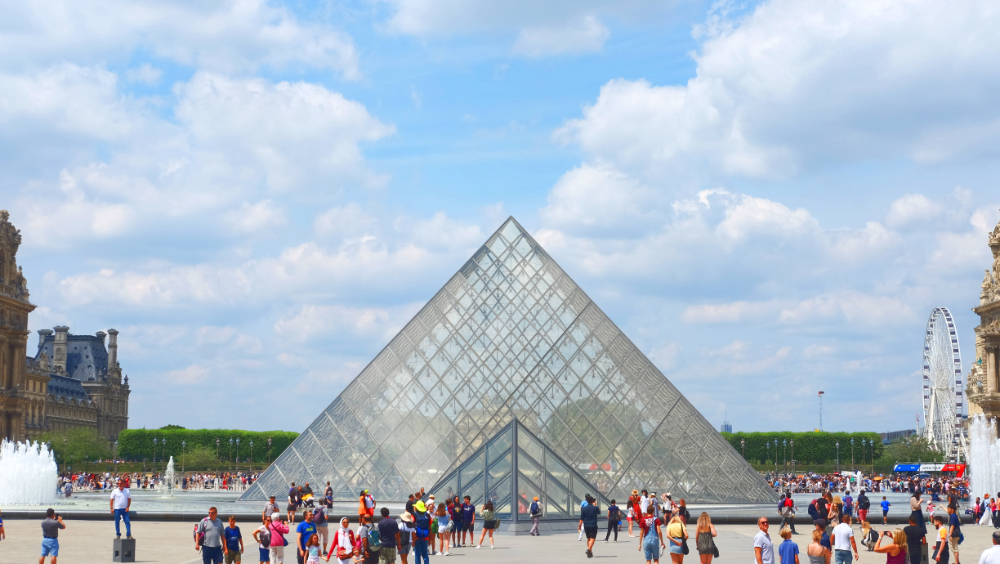
From there it’s a short wander down to the Louvre. Now I love approaching the phenomenal building from the back, where it’s vast epic-ness unfolds impossibly as you turn each corner, somehow revealing yet more building until you eventually find a gate that will dwarf you, leading you into one of the grand courtyards and suddenly the whole building engulfs you.
Should you go in? Absolutely! Should you go in now? That’s a tough one. The Louvre is truly vast. With more floors below ground than above, it’s a TARDIS. Not only can you get lost in it, but you can lose days. Set aside a day for the inside (at least!), but don’t let that distract you from enjoying Paris too.
Buy a ticket in advance, check out our guide to the must see exhibits inside, and come back tomorrow. Time to move on!
3. Jardin des Tuileries
Carry on past the Grande Pyramide, towards the Place du Carousel and the baby Arc de Triomphe (which not only frames the daddy Arc at the other end of the Champs-Élysées, but is crowned with replicas of the Four Horses of Saint Mark, one of Byzantium’s best preserved art treasures, taken by the Venetians from Constantinople at the end of the Fourth Crusade in 1204 and taken by Napoleon from Venice when he sacked them in 1794, only to be returned to Venice in 1815 after Napoleon’s defeat at Waterloo! And now there are replicas on this Arc and on the loggia of St Mark’s in Venice with the real Horses stabled inside. But I digress…)
Head on into the gardens, a beautiful pedestrian boulevard, lined with modern and ancient sculpture, filled with sightseers and buskers and – for those wanting to scratch their Da Vinci Code itch – the gardens are hosting a free mystery hunt for the second summer running: the Mystère aux Tuileries. A great way to explore the gardens, its trees and its art.
4. Musée de l’Orangerie
Then at the end of the Tuileries stands the palace’s Orangerie, which has been converted into another art museum. The l’Orangerie’s collection is a rotating one, focussing on a different French artist each season and its light-filled space.
[And across the river you’ll spot the Musée d’Orsay: another unmissable museum that we’ll save for another route.]
5. Place de la Concorde
Moving on from l’Orangerie you reach the Place de la Concorde: a round-a-bout with a view. With it’s iconic, gold-tipped obelisk, brought back from Luxor by Napoleon, and the view back to the Louvre and onwards to the Arc de Triomphe. The National Assembly building is across the river to the left; this geographic centre of French power (between the Assembly, the Presidential Palace and the old palace of the Louvre), is also an important hub of history: the obelisk marks the place where many of the Revolution’s most powerful victims were guillotined, back when it was called the Place de la Révolution.
This is that place! For all the pomp of its surroundings, Place de la Concorde isn’t much to see, but it’s the locus of so much history it gives me goosebumps. Marie Antoinette, Georges Danton, Maximilien Robespierre and hundreds of others were killed here, over years of upheaval, in front of screaming, jeering, carnival crowds. Goosebumps.

6. Champs-Élysées Garden
Onwards, past the traffic and towards the Arc takes you in the Champs-Élysées Gardens alongside one of the most famous boulevards in the world.
The view in every direction here is great. In summer in the daytime, every weekend is some march or carnival. In winter it becomes one of the most beautiful (and longest) Christmas Markets in the world!
7. Petit & Grand Palais
Halfway up the Champs-Élysées and you can’t miss the Grand Palais with its incredible, vast glass roof. Home to so many fascinating exhibitions, it’s still a tough call how to see the Palais best: from the inside, or from the outside at night, when it’s lit up and sparkles like a star.
8. Lido de Paris
Keep going up the Champs towards the Arc and just before you get there, atop an assuming mall, is the Lido de Paris: a fantastic cabaret with a terrific view!
9. Arc de Triomphe
The Arc de Triomphe is iconic and photogenic as all get out! It’s fascinating from every angle, with its hyper-deep relief sculptures and epic gravitas; and the view from it is even better!
10. Place du Trocadéro
There’s only one way to top that! From the Arc de Triomphe head down the Avenue Kléber, which will take you straight to the Place du Trocadéro.
By now you’ve glimpsed the Eiffel Tower all the way down the Seine. All day it’s been peaking above the buildings and trees, but this is the only way to reveal it. All the way down Kléber you haven’t seen it, and behind the Palais de Chaillot (whose wings frame the Trocadéro) the tower is completely obscured until you turn the corner and there it is – framed just as it should be.
Be there at night. From sunset til 1am the tower sparkles every hour (so in summer, that might be just a few times); this is City of Light Realness.

[booking_product_helper shortname=”paris”]
Day 3 – CENTER: South of the Seine
Start your day on the Île de la Cité (but not at the Notre Dame! You’ve done that!); instead head for the Boulevard du Palais which is dominated by the Palais de Justice de Paris and contains not one but two important sights.
Go first to the…
2. Conciergerie
The Conciergerie is an interesting sight. This 14th Century “palace & prison” was the last home of Marie Antoinette (among many others who fell afoul of whoever was in charge of France at any one time). It’s a perfectly preserved medieval masterpiece – for what it is.
But you’ve seen it now, so go next door to really get some wind blown up your skirt at…
3. Sainte-Chapelle
Nothing can prepare you for this. Even from the outside, the building looks – churchy? Tall perhaps? You’ve just seen Notre Dame the other day, this is positively boxy by comparison.
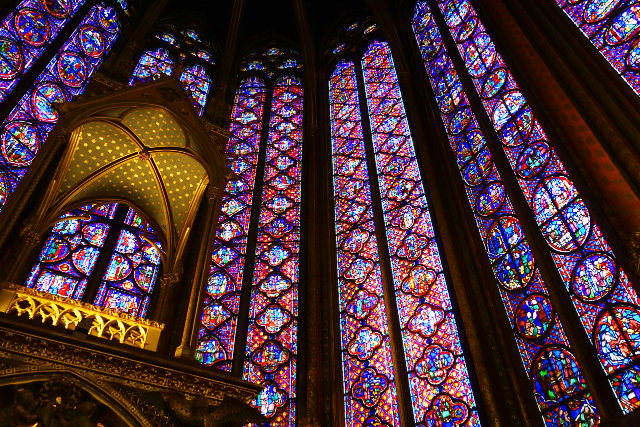
Hold on to that underwhelmed sensation as you go inside, because as you come through the door, you will gasp! What from the outside looked like dirty, dusky windows are actually a rich, royal blue and they are immense! This is really a perfectly preserved medieval masterpiece.
4. Musée d’Orsay
Having had your breath taken away, head south over the river and enjoy a westward stroll along the river.
This is for the view! Look behind you at the Notre Dame (again, you took these pictures before for Shakespear & Co., but you’re going to take a half dozen more), and up ahead, now you’ve got the Louvre from across the river, and the Tuilleries and onward. Browse the book and art sellers along the river. Enjoy the fresh air and before you know it you’ll be hitting the remarkable Musée d’Orsay.
Set inside the restored glory of the beaux-arts Gare d’Orsay (the train station that serviced all the main southbound lines), this collection of turn-of-the-century Parisian art is exactly where you want to be to capture that Moulin Rouge/Hugo Cabret vibe.
The building is great, the art is fantastic, the view from the museum is great. The Musée d’Orsay is genuinely a unmissable stop on your Parisian tour.
As is the next stop for today!…
5. Musée Rodin
The Rodin Museum is one of my favourite museums in Paris and it’s just a short walk south from the d’Orsay, down Rue de Bellechasse.
Set in Rodin’s own house and garden, this exceptional collection of finished works is complemented by a rich catalogue of studies completed by the artist and his studio over the years it took to perfect some of his most iconic sculptures. Few artists and collections lend themselves so well to tracking the development of their ideas and the refinement of their expression.
It’s also just a beautiful house and garden, and all in the shadow of…
6. Hôtel national des Invalides
Invalides is the French Imperial War Museum at the front – a fortress of a building, crammed with canons and memorabilia from the many eras of French military adventuring – while the back it’s dominated by an immense, golden dome: the final resting place of the Emperor Napoleon.
7. Champ de Mars
From the Tombeau de Napoléon, it’s a short walk west along the Avenue de Tourville to the Champ de Mars, which you may know better as the big grassy bit behind the Eiffel Tower.
Popular with tourists almost as much as with Parisians, the Champ de Mars is regularly used for fetes, fairs and picnics, and of course, for many many pictures with the Tower. If you’ve already taken in the picturesque view from across the river, up close it’s that much more massive (and not just because you’re closer…). Where it looks elegant filigreed from a distance, the Tower – viewed from below – is immense, covered with heavy wrought detailing and standing tall off its four huge, square feet.
8. Eiffel Tower
And there’s no better way to end this day than heading up it.
If (like me) you’re not a fan of heights, you can keep it simple, going up to just the first or second viewing deck, without terrorising yourself by going to the very top. Access is easy (and even easier if you buy your tickets in advance) with barely a step to be climbed if you want to take it easy in one of the many lazy-boxes (i.e. lifts).
In recent years, Eiffel’s private apartment in the sky has been re-opened to the public, giving an impressive reminder of period styling and just how one might entertain guests if you have the most exclusive address in the world.
[booking_product_helper shortname=”paris”]
Day 4 – NORTH-WEST
If you’re looking for a change of pace (and some great Amelié and Moulin Rouge inspiration!) then you’re going to want to head up to Montmartre.
1. Sacré-Cœur
This time I’d suggest starting at the top and heading straight for the “mont” in Montmartre. The cathedral of Sacré-Cœur is beautiful (and yet another Parisian icon!), and the view – back across the Gare du Nord towards the Eiffel Tower, Louvre and Notre Dame – is breath-catching.
2. Musée de Montmartre
From there is a short walk through winding, Medieval streets to the Montmartre Museum, which gives a great snapshot of the areas history and the impact that it has had on so many influential artists, especially in the 19th and 20th Century, when it played home to seemingly every great painter, sculptor and writer. All the “content creators” of their days, and all living in this tight packed arrondissement, sharing ideas, influences and competition.
3. Dalí Paris
One example of which is Salvador Dalí, whose home in Paris has been preserved as a museum to the great surrealist; another easy walk around the corner and great for getting a flavour of early 20th century artistic life in the quarter.
4. Le Moulin de la Galette
If it’s around lunchtime, I’d highly recommend stopping in at Le Moulin de la Galette; the food is fantastic and authentic, and the setting, in one of the last of the windmills that used to dominate the suburb (and which inspired the name to the famous burlesque venue).
5. Henri de Toulouse-Lautrec’s House and Studio
Another artist museum, this time for Lautrec. It’s his late 19th Century vision of the district that is probably what you picture when you think of it, whether you know him or not. If you’ve been to the Museé d’Orsay then you’ve already reacquainted yourself with his style and oeuvre, but seeing his art in the streets that inspired it (albeit cleaner now and less absinthe-ridden) really brings his pictures and their characters to life.
6. Cimetière de Montmartre
The Montmartre Cemetery is a peaceful place in among the hubbub, and worth stopping in if you want a break from all the noise.
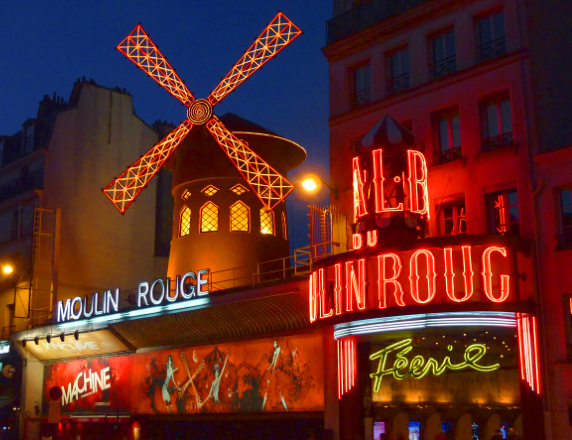
7. La Machine du Moulin Rouge
And then to finish the day, head to the Moulin Rouge itself. It’s famous Red Windmill and iconic lighting ensure you can’t miss it, back on the main drag.
The shows these days tick a lot of boxes. Neither this nor the Lido push the burlesque envelope, instead focussing their energies on just being exceptional. As memorable holiday nights out go, this is a pretty great one.
[booking_product_helper shortname=”paris”]
Day 5 – NORTH
Starting from near the centre and moving north can also be a great, less than conventional day in Paris (with another hint of Amelié).
1. Le Centre Pompidou
Starting at the Pompidou you can’t go wrong. The famously “inside out” building, designed by Richard Rogers and Renzo Piano, is party-coloured and thrilling throughout.
Be sure to snap the Notre Dame glimpses from the top floor!
2. Le Marais
As you leave the Pompidou and walk east you’ll enter La Marais. Like Montmartre, this district has had a reputation among fashion Bohemians for over a hundred years. The roads are interesting, pokey and fun, the shops are independent and high-quality, and the restaurants and cafes are great.
This area is among my favourites to stay in when visiting Paris. You can find a number of boutique hotels that won’t (necessarily) break the bank and the location is so central.
Naturally, for any thriving cultural centre within a metropolis, this is also the main concentration of gay culture in Paris; so be sure to put the gay in Gay Paris.
3. Musée National Picasso-Paris
And in the Marais you’ll come across the Picasso Museum. For once: not based in a house that artist ever lived in, this museum is a fine collection of his work, spanning each of his eras.
4. Musée des Arts et Métiers
And then if you want to put your thinking cap on, the Museum of Arts and Measures is a fascinating oddity.
I first sought this museum out because I’m a fan of Umberto Eco’s Foucault’s Pendulum. Having come here it’s hard not to appreciate this ecclectic collection of human ingenuity and celebration of the French contribution to universal understanding.
5. Place de la République
The recent pedestrianisation of this square has turned it into a focal point for Parisian life in recent years. With it’s monument to Marianne – the personification of France and the Republic – at its centre, it is here that crowds have taken to gathering in times of mourning and to express solidarity (initially after the attack on the nearby offices of Charlie Hebdo in January 2015, and again later that same year after the Paris Attacks).
But it’s not all sombre! On most weekends the local communities organise cultural exchange events, where food, music and dancing by Parisians from all over the world is demonstrated and taught to other Parisians. It’s a celebration of the unity of humanity.
6. Canal St Martin & Passerelle des Douanes
Heading further north you’ll come to the Canal St Martin and the Passerelle des Douanes; this is more than just more fodder for the Amelié fans!
The Canal has become the bohemian centre of modern Paris, where Montmartre and Le Marais – while still lovely – have matured into areas where no self-respecting bohemian could actually afford to live. It’s lined with shady trees, stalls, cafes, restaurants and bars; there are few places in the world so nice to stroll on a long summer afternoon and evening; to enjoy an Aperol and watch the world drift by; to sit in a cafe and have a lively debate with friends.
Deep sigh.
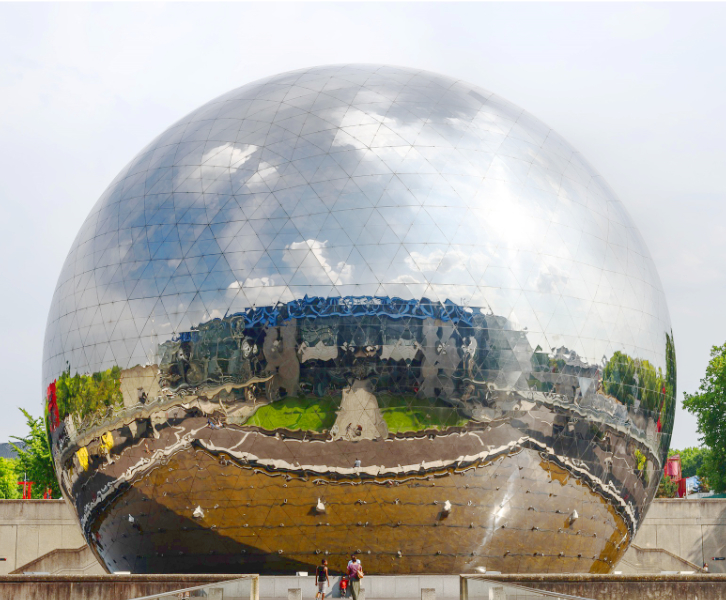
7. La Villette
And if you’ve managed to walk the length of the canal without drinking yourself into a stupor (or succumbing to the area completely and buying a flat), you’ll be rewarded with La Villette: another gorgeous public park, filled with sculpture and cultural venues. The Grand Hall hosts touring expositions, the City of Science and Industry will engage children; there are two great music halls, including the home of the Paris Philharmonic and a further three live music venues, including the Cabaret Sauvage!
Find a show you’re not even sure you’ll like, and somehow this will wind up topping one of the greatest days of your trip!
Trés cool.
[booking_product_helper shortname=”paris”]
Day 6 – WEST
If you want to escape the city and you’ve not had quite enough of glorious public paths, then you should head west to one of the largest city parks anywhere in the world:
1. Bois de Boulogne
This park is stupid huge. From fields to rambling English gardens to well-ordered formality, this park contains worlds.
2. Parc de Bagatelle
One of my favourite worlds in here is the Parc de Bagatelle. This 59 acre “park-inside-a-park” centres around the Château de Bagatelle; and hunting lodge and maison de pleasance established as early as the 1720s, for the hunting parties to rest and party. It’s grown into a beautiful mock chateau, complete with formal gardens and seemingly infinite areas to rest, walk and picnic.
3. Musée Marmottan Monet
If you’re taken by the mood to paint some of this natural beauty but, like me, lack the skill to do so artfully, why not head to this Monet Museum on the edge of the bois? It’s a great little collection of Monet’s nature-inspired art, and a perfect sinecure for the non-painter in all of us.
4. Jardin d’Acclimatation
Definitely erring on the younger family-side, this fun-park first opened in 1860 as a zoo. There is still a petting zoo in the park, alongside child-appropriate rides and activities, as well as a Science and Art Museum. If you’ve made the dual mistakes of having children and taking them on holiday with you, then this could be a good place to tire them out.
5. Fondation Louis Vuitton
The Louis Vuitton Foundation is a modern art space reminiscent of London’s Saatchi Gallery: a privately managed art collection open to the public, proudly highlighting the vanguard of modern art. Unlike the Saatchi Gallery, the Fondation isn’t quite free, but for a mere €14 it’s not going to break the bank and I love the juxtaposition of the intensely modern works here with the more soothing, nature-inspired works of Monet you just left (who was, of course, among the trend-setting vanguard of modern art in his own time). The clean, geometric lines of the Fondation building and the art in and around it are all in conversation with the nature of the Bois too, in their way.
[booking_product_helper shortname=”paris”]
Day 7 – SHOPPING
I’m always struck my how well-dressed everyone in Paris is. It’s not about wealth, showy fashion and labels, they’re just plain classy.
So, if you feel you need to lift your game, you need to head towards the shopping district!
Rue du Faubourg Saint-Honoré
Window shopping is a great way to get in the mood for spending more money than you should on clothing that you can just about justify needing. This is the appetiser, getting yourself salivating, and the Rue du Faubourg Saint-Honoré is ideal for that. Here you’ll find the most impressive and least justifiable boutiques, but so much sparkle!
Palais Garnier – Opera House
And just as you start to feel your will weakening, and the need to buy growing, you come across the Place Vendôme, and beyond it, the Paris Opera House: the Palais Garnier. On its own a beautiful building and worth seeing (and touring the interior if you feel like even more sightseeing), but it’s also the marker of where your real shopping will start, for just behind the Opera House is…
Boulevard Haussmann
This is the real shopping district of Paris. Home to numerous fantastic malls, the grandfather of which is the Galeries Lafayette.
The Galeries are a sight worth seeing on their own. The original building is a 19th Century beauty, oozing that same Belle Époque charisma as London’s Selfridges. Duck inside and you realise that these Galeries are so big they’ve split what might be mere floors in other department stores into whole other buildings!
The original building is for women’s fashion (but a must see for all serious shoppers as the glass dome over it’s central, colonnaded light well is an epic, cathedral to consumerism), next door is another building for men’s; across the road is a building for home decor, with a glorious Parisien food hall in the lower basement floors; down the road is children… And this is just one department store! There’s also Printemps (similarly across multiple buildings) and any number of smaller, more typical malls, shops, stores and boutiques all the way from the Boulevard Haussmann up to the the Gare Saint-Lazare.
Believe it or not I’m not a lover of shopping, but I could learn to love it here.
Le Bouillon Chartier
And when you’ve worked up an appetite and spent your entire travel budget, spend just a little bit more on the best, most traditional Parisien meal you’ll find (without blowing next year’s budget too!): Le Bouillon has been serving great, unvarnished French food 365 days a year since 1896. Every Parisien and their visitors have eaten in this fantastic eatery, from Ernest Hemingway to Édith Piaf. It’s first place I tried escargot, and they’re still the best I’ve had anywhere in the world. The steak frites is elevated to an unpretentious art form. And the onion soup! If you think you’ve had it good before, you’ll see how it’s really done!
Le Bouillon is a popular destination and you’ll sometimes need to queue to get in, but it’s open every day of the year and it’s always worth the wait.
HONOURABLE MENTIONS
These last couple rank high on my list of must do’s in Paris, but they don’t quite slot in to any good walkabout routes… C’est la vie – if you have the time to make get out to them, you won’t regret it!
Pére la Chaise
This famous cemetery has been the location and inspiration for many a film, so if you have a feeling like you’ve seen some corners of it before, you’re probably right.
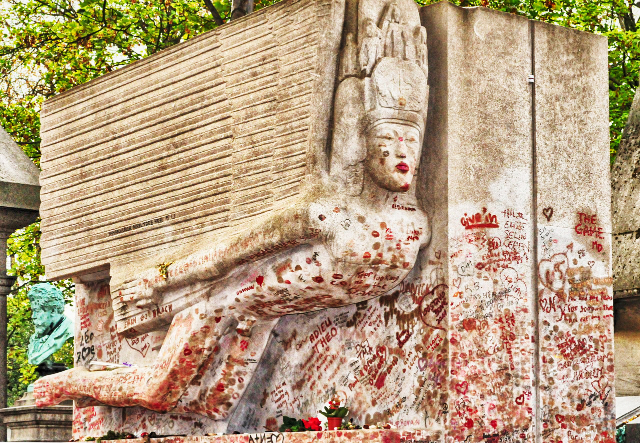
There are a lot of different vibes and corners. From tumble down avenues where the tombs seem to crowd in on one another, to peaceful groves; broad avenues and pathways so narrow you wonder how a coffin ever made it through; this is a surprisingly fun day out. Set aside at least 2-3 hours to walk around, and be sure to give yourself time to wander and just get lost: don’t treat it like a morbid game of celebrity bingo, where you’re just running around looking for the famous corpses!
But having said that do be sure to pay your respects to Oscar Wilde (with his beautiful, usually lip-stick smeared monument), Jim Morrison, Édith Piaf and the many many many other icons memorialised here.
Palace of Versaille
And then there’s Versaille! Don’t sell this incredible sight short. It will take at least a whole day to see both the palace and the gardens, so if you get there late, do not try to rush through either in order to see everything. You’ll just hate the whole thing and see none of it.
Instead, consider getting a 2 day passport and splitting your visit. The price difference between a 1 day and 2 day pass is minimal (just an extra €3), but the chance to drink in all the many facets of this extraordinary venue is worth much much more than that.

In fairness, the palace will take no more than 2-3 hours, and is generally so crowded that you’ll be carried through on a tide of gawkers holding audio guides to their head. The interiors are spectacularly maintained and restored; the colours are all so remarkably vibrant and rich, but it’s really just one nice (but small) room after another until you reach The War Room more commonly known as the Hall of Mirrors. This is where your jaw will be on the floor, and it will likely stay there through the King’s apartments and into the Peace Room and Queen’s apartments.
It’s the gardens that could take an entire day on their own. It’s possible to rush through it and tick the boxes in the rest of a single day, if you’ve started early, but let’s face it: you’re on holiday, you slept in, then you caught the 30 minute train from Paris to Gare de Versailles Château Rive Gauche, walked up the hill to the palace, bought your ticket (because you forgot to buy them online in advance) and waited in the line to get in for 45 minutes… So you’re in at 3pm and the whole thing closes at 6 for some event!
So come back the next day and wander the gardens. Revel in the fountains and formal gardens, then wander all the way down to the Grand Canal and the Grand Trianon, the Petit Trianon and then get lost in Le domain de Marie-Antoinette and Le Hameau.
Keep an eye out online for any upcoming events, just in case there’s an early closing time to factor in on the day/s you plan to visit, or to buy the separate tickets if you want to join in! In summer especially, the gardens are brought to life with numerous spectacles, all reminiscent of the entertainments and masques hosted there in the reign of Louis XIV.
And don’t forget to check out our tips, links and hacks for how to travel in style without breaking your budget.
[booking_product_helper shortname=”paris”]

Leave a Reply
You must be logged in to post a comment.