

If you’re planning a trip to Milan: I’m jealous! The history, the food, the lifestyle the weather… Italy is a tourist’s Disneyland, full of different “lands” and distinct adventures! And Milan is just about the best of it all. It’s fashionable, trendy and complex. Modern and ancient. Cutting edge and fashionable; a Medieval time capsule sparkling with Renaissance gems. The attractions of Milan are everywhere; so much so that it can be overwhelming.
So what are the attractions that you just cannot miss while you’re in Milan?
Let’s find out!
[booking_product_helper shortname=”milan”]
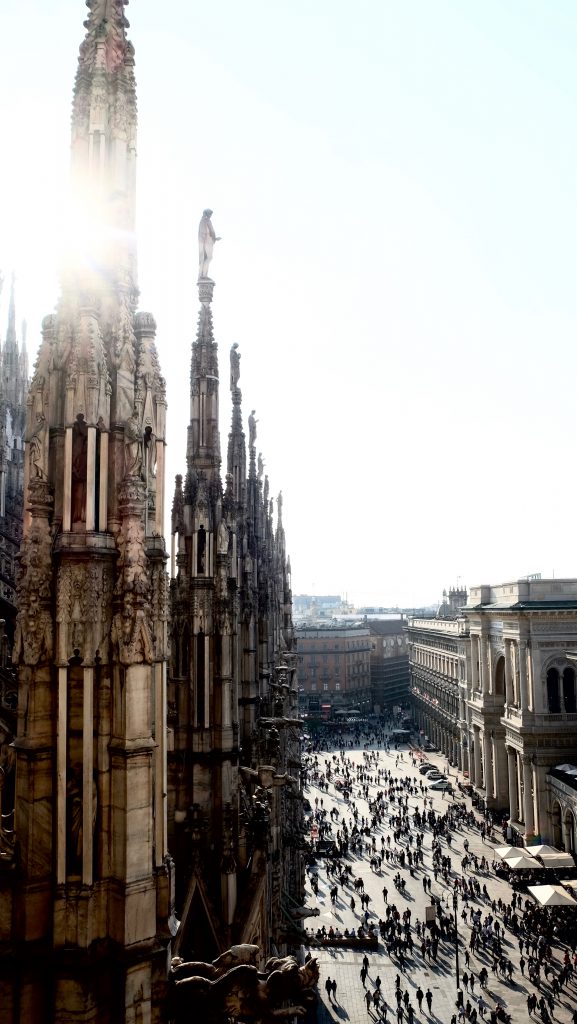
1. Il Duomo – Milan Cathedral
That’s right! Florence isn’t the only Italian city to have a big church go by the name, and unlike Florence, I’ve never known Milan Cathedral to disappoint.
No matter how long you have to explore Milan, start your trip here. I suggest this for 2 reasons:
- The Piazza del Duomo is the cultural and historical centre of the town. Almost everything is an easy walk from here and almost every street will lead you back here. You can’t get lost in Milan if you know where the Duomo is.
- The building itself is so photogenic and fascinating! I never get tired of finding some new story, touch or angle on it. You may not go in more than once, but you’ll want to see it more than once; see how it changes from noon to sunset to nighttime. It’ll reward you!
Now I’ve seen a lot of Italian churches – more than enough to know they can get very same-y – but the Duomo really is breath-taking and truly unique.
So what makes it so great?
Well, it’s big, though it’s only be the fifth largest cathedral in the world. It also packs in more sculptures than any other church – some 3000 individual characters, along with all the incidental bits. Truly, there’s barely an inch, inside or out, that doesn’t have something going on.
And do not miss out on a trip up to the terrazza or rooftop. There are no excuses here; it’s not so high or precipitous as to trigger your vertigo, and unlike so many European churches, Il Duomo has a lift, so there’s no need to wind yourself, trudging up the stairs.
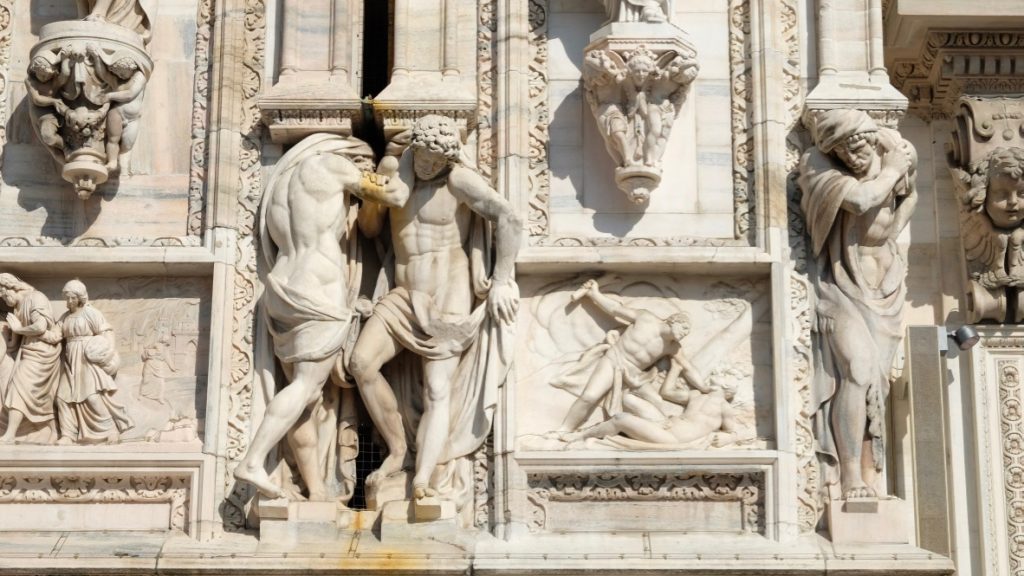
And when you get up there, just keep in mind that every detail and flourish you’re seeing was never meant to be seen! Not up close anyway, and yet here it all is! Down to the most delicate petal and angel’s toenail!
The stratospheric level of workmanship gobsmacks me every time! Everywhere you look, some genius with a chisel made it incredible.
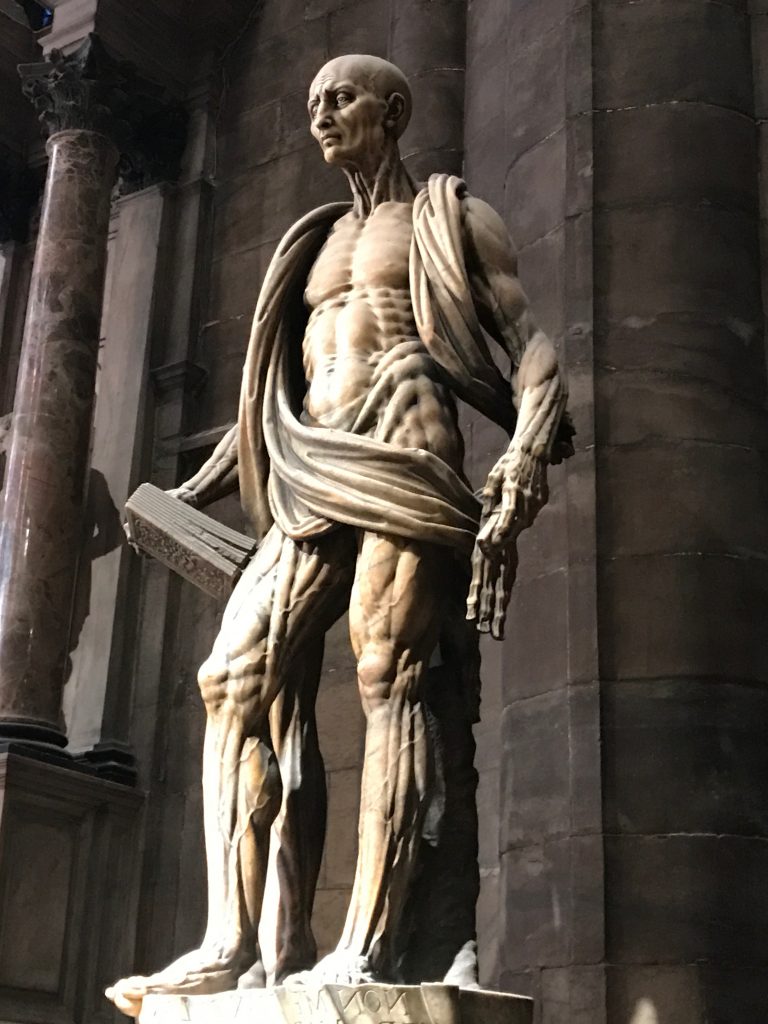
And the inside is pretty epic too; an forest of columns, each crowned with more statues. This isn’t one of those up-lifting, heart-soaring churches – Il Duomo is about power and judgement… and it’s about the genius of one man in particular: Leonardo Da Vinci.
That’s right! For all those Code decoders, Milan is where many of the great man’s greatest hits can be found, and the Duomo is among them.
Here, it’s Leonardo who designed the high altar and crucifix and who cracked many of the Duomo’s toughest engineering conundrums, not least of which being: how do you get all the marble into the centre of town? Read on…
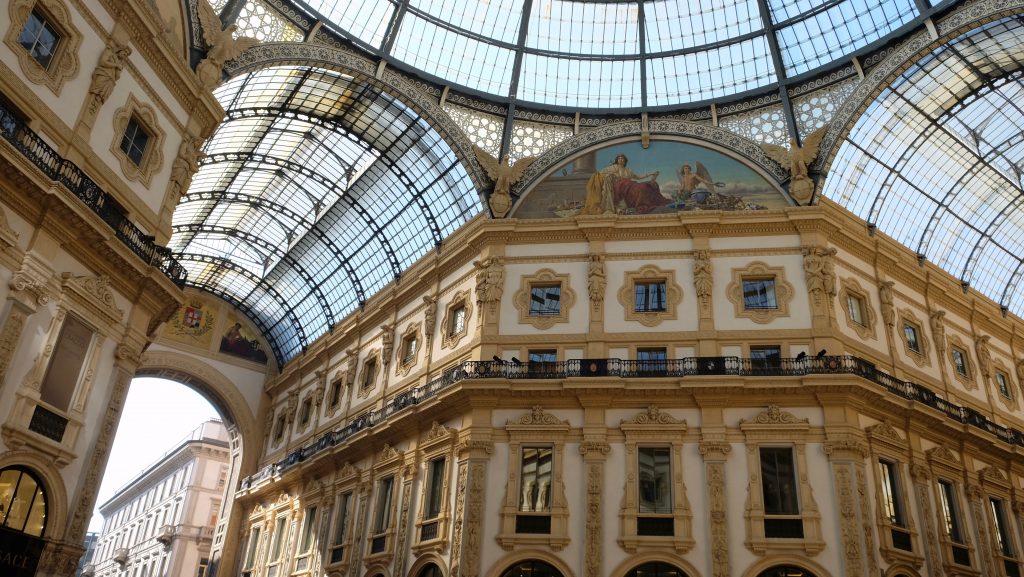
2. Grand Galleria Vittorio Emanuele II
While you’re hanging out around the Piazza del Duomo, you won’t be able to miss this glorious temple dedicated to Milan’s other deity: Style!
The Galleria holds the title as the world’s first “shopping mall”, and it is a glorious, sunlit space: it’s glass roof was an engineering achievement of its age, every bit as incredible as the Duomo beside it.
But don’t actually shop here. The prices are eye-wateringly tourist-gouging and the value: not-so-much. With one big exception! Just inside the entrance from the Piazza are the stairs up to the Bar Camparino, where – if you’re lucky – you can get a chair on the Aperol terrace overlooking the square to enjoy some of those Milanese cocktails for remarkably reasonable prices! (€8 last time we were there!)
And if you’re into kitsch tourist gimmicks, in the centre of the Galleria you’ll also find a well-worn divot in the marble floor, right over the bull in Milan’s coat of arms. Tradition says that if you put your heal in the hole and spin around three times, you’ll be certain to return to Milan. It’s cheaper than throwing coins into the Trevi Fountain, but I’ve also managed to get back to Milan without sticking my foot in a bull.
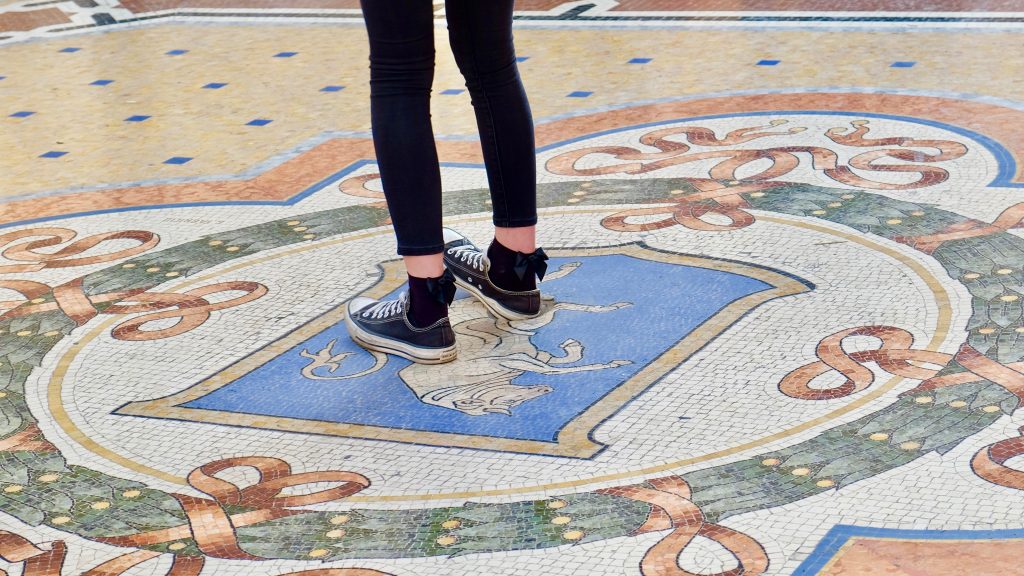
Nevertheless, the Galleria is a gorgeous bit of architecture and a memorable destination.
3. La Scala
On the other side of the Galleria is the world-famous opera house: La Scala.
If opera isn’t your thing, I’d still recommend taking a tour via the museum. The auditorium’s remarkable opulence (or gaudy tackiness – however you see it) marks this theatre as truly unique, and it’s position at the very heart of Milanese culture and society – as the place to be seen – has put this building at the centre of centuries of global trends.
4. Brera District & Pinacoteca di Brera
And around La Scala is the Brera District (could Milan be more walkable?!).
This is among my favourite areas of Milan, not dissimilar in atmosphere Montmartre in Paris; it’s got the same bohemian vibe, thanks to the population of artists, artisans, students and writers that gathered here, firstly as a suburb beyond Milan’s traditional walls, and then after the foundation of the art school and gallery (and botanical gardens!) in the Palazzo Brera in 1776. This is the Pinacoteca di Brera and is one of Italy’s major art galleries (…but I’m not going to lie; it’s no Uffizi or l’Accademia del’Arte, or Villa Borghese… Italy does not want for incredible galleries. But if you’re in Milan and need art, this will work out.)

Simply wandering these streets is a pleasure, but if you want to treat yourself, there are some fine walking and tasting tours of the quarter. These make a point of stopping off and sampling the delicacies from some of the more out-of-way venues, while giving you a bit of the areas history and importance. You’ll find the funkiest boutiques, the most interesting bars, as well as the most up-and-coming designers.
And that’s only all year round, but for one week in April every year, the Brera gets supercharged when it’s taken over by Milan Design Week – the Salone del Mobile!
Unlike Milan Fashion Week in February, when the world’s press descends on the city to snap pics of rake-thin models in impractical outer wear, the Salone breaks out of the runways and injects real energy into the Brera. Suddenly, private apartments are turned into pop-up boutiques, displaying all the very latest homeware fashions and designs.
Every night becomes a gala! Locals and visitors mingle on street corners, outside bars or in unexpected venues, swapping critiques, ideas and advice on what they’ve seen or missed. It’s an exceptional atmosphere, swelling the city’s population by a minimum 500,000 and giving the air a electric creativity.
I’m no designer, but I love Milan in April.
[Special note: 2019 is also Milan’s Triennale, meaning that from February to September this year, the city is crowded with installations, exhibitions and art projects. The combination of the Salone and the Triennale promises to be truly special for anyone lucky enough to visit. Can’t wait!]
5. Quadrilatero della Moda
Alongside the Brera, you’ll likely wander into the “Rectangle of Fashion” of Quadrilatero della Moda (everything really does sound better in Italian).
This is simply four perpendicular streets – Via Montenapoleone, Via della Spiga, Via Sant’Andrea and Via Manzoni – which form a block within which the great fashion houses traditionally have their major studios. This is the beating heart of Fashion (and the home of Fashion Week); come and browse the boutiques of Versace, Gucci and Armani – this is where window shopping was born.
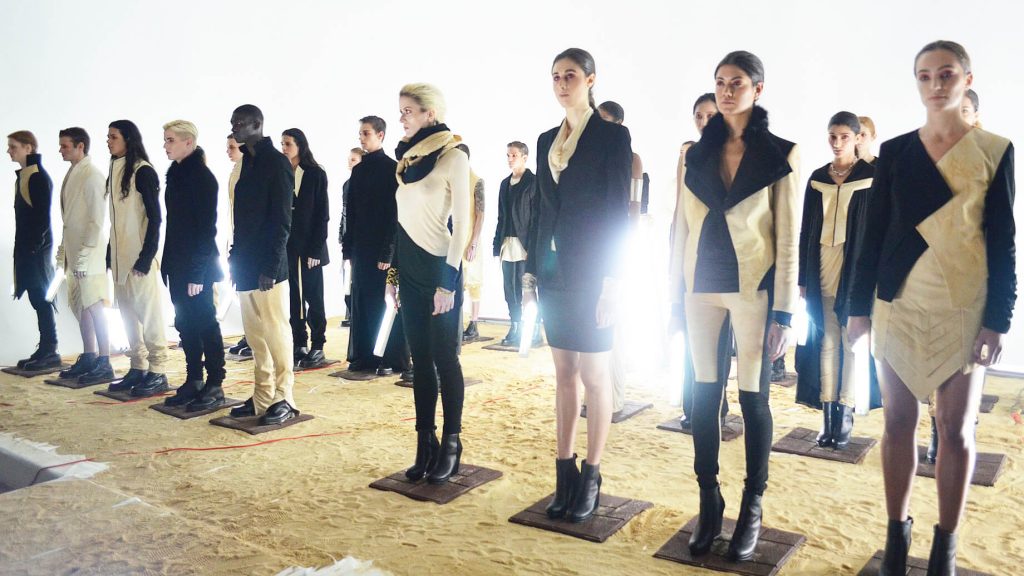
But once again, it’s unlikely that this is where you’ll find any bargains. Check out The Highline Outlet (though this shop is temporarily closed as of May 2020 due to the Coronavirus. Fingers crossed it returns to us soon!)) for that, where us mere mortals can pick up some handy off-season discounts.
6. Castello Sforza & Parco Sempione
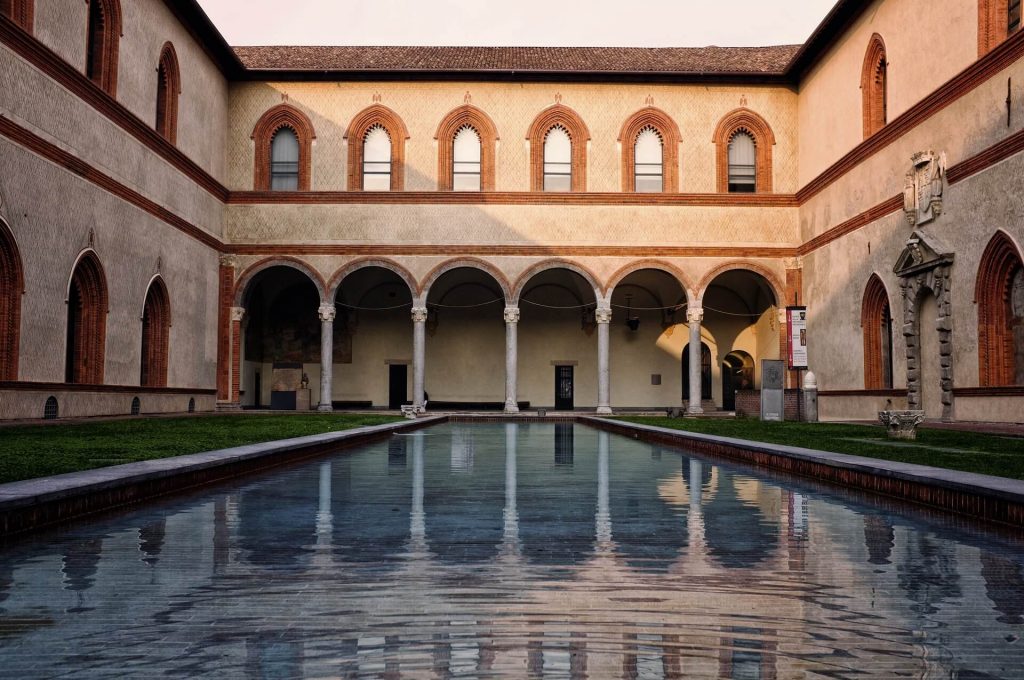
On the other side of the Brera is this fantastic Medieval/Renaissance castle. Familiar to anyone who played The Journeyman Project 2: Buried in Time as the location of Leonardo da Vinci’s workshop while he worked for the Duke of Milan.
[N.B.: I didn’t realise that game had had such an impact on me back in 1995, but the first time I saw the castle I was right back there, pointing, clicking and waiting to load.]
The inner courtyards are open to the public, so you can enjoy this building for free as you pass through into the enormous Parco Sempione beyond.
Getting inside the Castello will cost you a little, but gains you entrance to a number of exhibitions, both temporary and permanent (the latter, of course, featuring none other than Leonardo da Vinci! That guy is all over this place.)
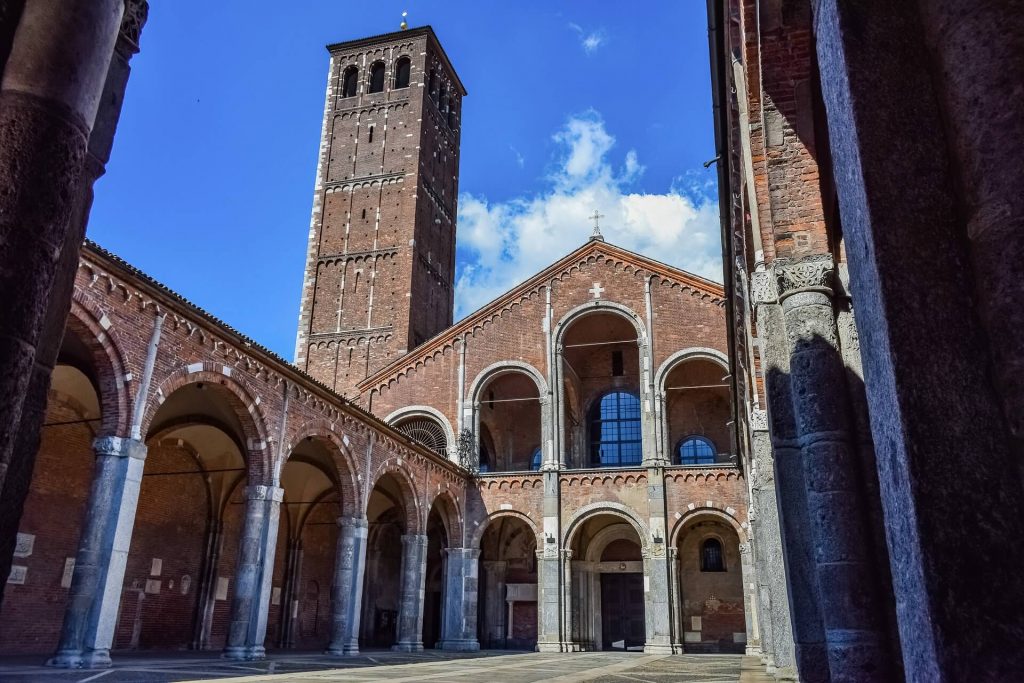
7. Basilica of Sant’Ambrogio
As you’ll remember from my Barcelona travelogue, I’m a sucker for a Roman building that survived in anything like continuous use to the present day, and here’s another.
OK: it’s doubtless undergone an expansion or two and possibly a redesign, but there are elements of the Basilica here that date right back to Roman Milan. In a city so obsessed not only with the now but with the next, this building still operates as a religious centre some 2000 years after it was built: a tangible, heavy then.
8. Cimitero Monumentale
I love a good cemetery and the Monumental Cemetery does not disappoint.
Second only to Paris’s Père Lachaise in size and maze-like density, the impressive, ornate, whimsical, and plain weird tombs and mausoleums are well worth a visit.

9. Navigli Canals
The Navigli district is my other favourite district.
Back in the day, this is where the workers and warehouses huddled around the manmade canals that link the Po River to the nearby lakes. Now, this area has gentrified, transforming it into an Amsterdam-like series of tree-and-restaurant-lined waterways that come alive at night.
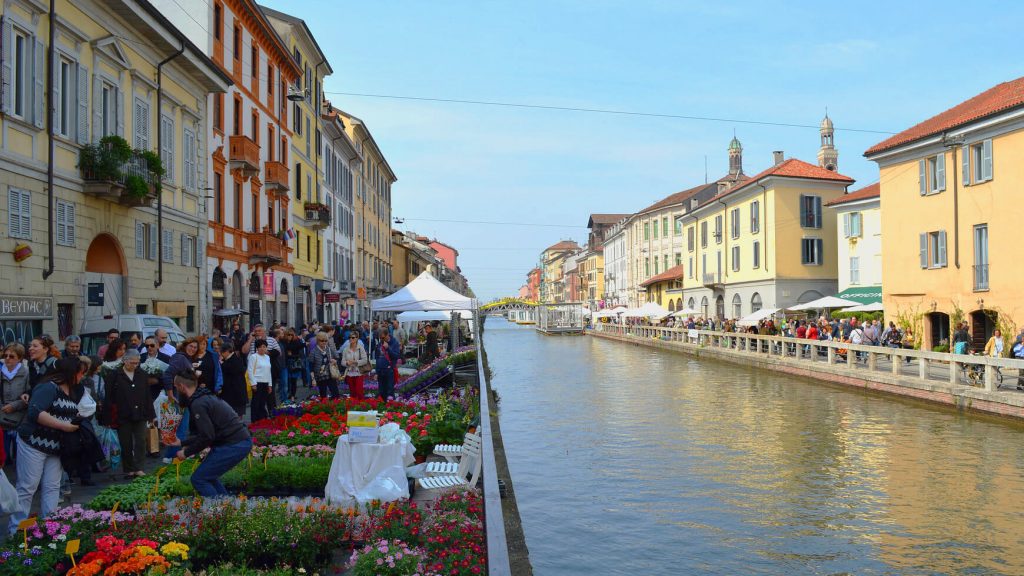
Who designed the locks?… There’s no prize; it’s Leonardo da Vinci… Why did he do it? To transport the marble needed for the Duomo to the centre of the city.
Is there anything that guy couldn’t do?
10. Santa Maria delle Grazie
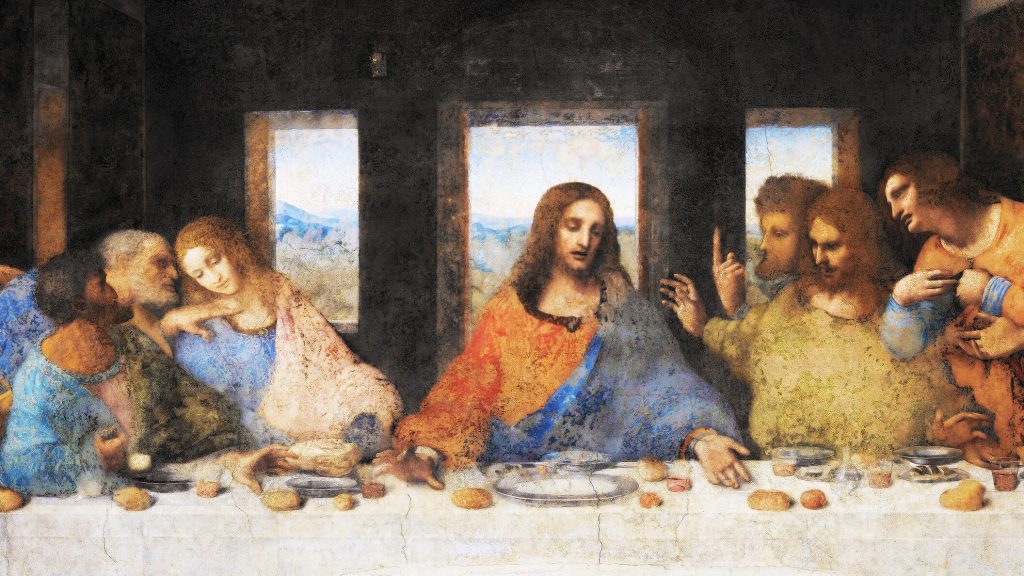
And while we’re still on the great man, his most famous surviving work in Milan is, of course, The Last Supper.
This is one of those remarkable survivors of history. Forgotten, misattributed, shot at… you name it, this painting nearly not made it more times than most. And for the princely sum of €22.45 gets you 15 minutes to gawp at the faded, pock-marked convent wall.
I’m (obviously) less enamoured of this sight; even as you stand in line there’s a sense that you’re checking it off a list. Was there a time it would’ve been more amazing? Maybe, if this is your thing. But today, the picture is in such poor shape that it’s difficult to appreciate much of what’s left.
Like the Mona Lisa, your opinion is a Catch-22: if you like it, it’s because you’ve been told to, and if you dislike it it’s because you’re contrary.
Save yourself the queue and the fee. Buy it on a postcard.
11. Milano Centrale
That’s right! The train station!
For the record: fascism is bad and Mussolini was a nogoodnik of the highest order. It’s also a myth that it’s thanks to him that the Italian trains run on time to this day.
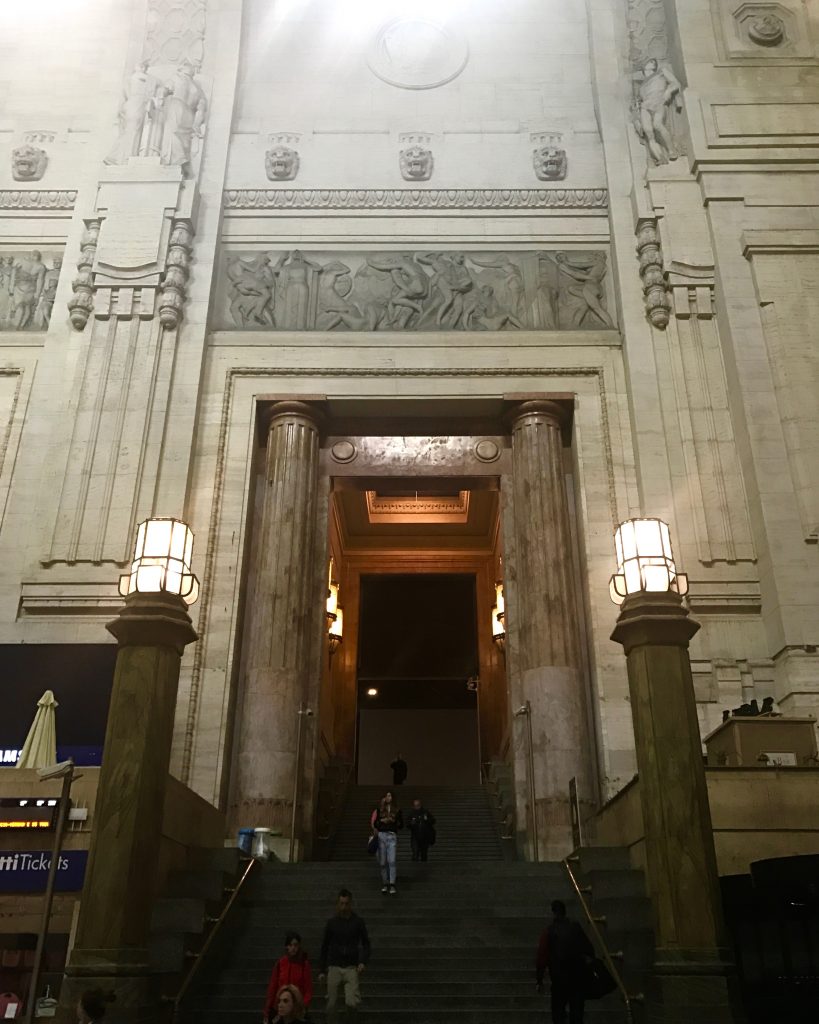
Having said that… the fascist architecture that survives in Italy is some of the most marvellously Art Deco-meets-Ayn Rand stuff anywhere in the world, and Milan Central Railway Station is a great example.
Monumental granite pillars. Epic symbols of strength and determination. The whole thing is overwhelming in all the ways it was intended to be, and it’s just about the most impressive example of the fascist aesthetic outside of the Esposizione Universale Roma (EUR).
I went daily to the cathedral of Milan, that singular mountain which was torn out of the rocks of Carrara. I saw the church for the first time in the clear moonlight; dazzlingly white… Its interior dazzled me more than St. Peter’s Church; the strange gloom, the light which streamed through the painted windows – the wonderful mystical world which revealed itself here – yes, it was a church of God!
Hans Christian Andersen
[booking_product_helper shortname=”milan”]
And don’t forget to check out our tips, links and hacks for how to travel in style without breaking your budget.

What style are you using on your site?
It looks great.
Thanks Kristian.
The theme is Milan Pro, running on the Genesis Framework for WordPress. Hope that helps!
Very good info. Lucky me I discovered your site by accident (stumbleupon). I have saved it for later!
Thanks Izzi!
My hubby and I are traveling to Italy in May. Have waited 25 years to do it and want to do it right. Our itinerary for 2 weeks is, fly into Rome for 4 days train to Siena for 2 days train to Florence for 2 or 3 days? . Train to vernazza for 2 days train to venice for 2 days .train to Milan for 2 days ..fly home from there. My questions..how many days in Florence and Venice and do I need to make train reservations before we get there or can we do it when we arrive in Rome.
Aww gee that’s tough!
I’m a huge Florence fan, but I’ve known it to not strike everyone quite the same. Even if you’re only going for a taste, give yourself 3 nights; between the Academie del’Arte (for David), the Uffizi (which is incredible) and the glory that is strolling along the Arno, window-shopping on the Ponte del’Vecchio, taking in the Pazzi Chapel and the Medici Tombs…. there’s just so much! And all of it is great!
(I’d happily stay longer, but you’re obviously on a tight schedule…so 3 days!)
And then Venice. Oh Venice…what any of us would do to see it without the tourists! Truly, this is one of the places in the world that we ruin just by being there. It’s expensive, it can be crowded, the lines can be long and the view will be almost always spoiled by some other gawper with a camera. But you know what? There is no where in the world so special to get lost. Give yourse;f 2 nights so you have at least one full day there. Pay the premium to stay close to St Mark’s Square in the very center of the city; find a converted palazzo — this is absolutely the place to book something special.
You’ve got a strong itinerary! I’m really jealous and know you’ll love it. Relish all of it!
Consider going via Orvieto on your way from Rome to Siena; it’s another gorgeous hill-top village that’s really special and a little out of the way and you can do it in an afternoon. Perugia too is a special little town around there that can be lovely…and San Gimignano…and all of Tuscany and Umbria!
Have a great time! Let us know what you thought of it all. We’re still working on our Florence guide, and we’ll be back in Rome ourselves in just a couple of months, so definitely report back on what you loved there (don’t miss the Termé di Caracalla! Most people do, and it’s some of the best ruins in Rome!).